Use an isolated restore destination
Define the object, owner and expected state before changing any setting.
Test recovery of approved SOP masters, release copies and document-control evidence before a real loss occurs.
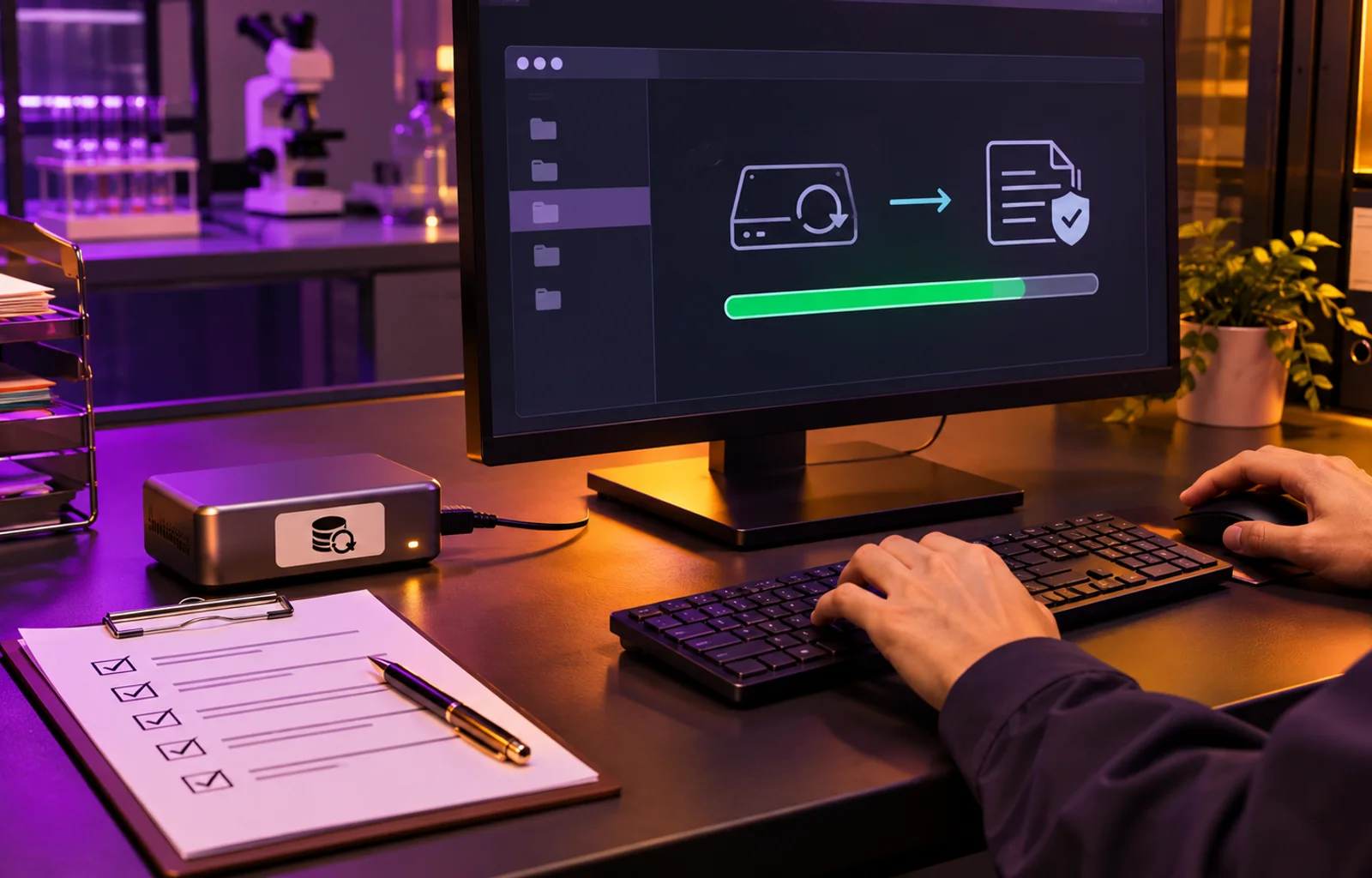
Restore a representative approved SOP set to an isolated location, verify revision and content, and record the recovery result, timing and exception owner.
A backup job can report success while omitting the master path, retaining the wrong revision or requiring an unavailable credential. Recovery testing exposes those gaps before a deletion, device failure or migration turns them into a quality event.
Approve recovery only when the restored object can be identified, opened, compared and returned to a controlled state. Stop if the test would overwrite the live master or if the recovery owner cannot access the independent source.
Choose recovery samples that represent the real environment: different file types, approval records, revision metadata, folder depth and release dependencies. Restore to an isolated path so the test cannot alter the live master. Compare content with a recorded hash or another controlled method, then confirm that the recovered package can support an authorized release decision.
Include people and credentials in the exercise. The backup may be technically healthy while the recovery owner is absent, the encryption key is unavailable, the storage account has expired or the procedure assumes a device that also failed. Record each dependency and create an alternative that does not concentrate the master, backup and unlock route in the same event.
Use this guidance as a review framework rather than a universal configuration. Record the exact Windows version, storage location, account type, document application and protection-tool release used in each test. Repeat representative checks after migrations, updates or ownership changes. A control is ready only when staff can operate it, evidence it and recover from failure without weakening the approved-document boundary.
Each layer addresses a different failure path. None should be treated as proof of the others.
Define the object, owner and expected state before changing any setting.
Test the ordinary workflow with fictional material and record the observed result.
Separate technical restriction from approval, backup and human authorization.
Assign an exception owner and a date for review or closure.
Repeat the test when storage, account, software or process conditions change.
Use fictional material for destructive tests and preserve the live approved master.
Choose a representative fictional SOP set
Confirm the backup inventory and recovery owner
Simulate loss without touching production
Restore into an isolated test path
Open and compare each recovered object
Check revision, approval and release evidence
Record elapsed time and missing dependencies
Correct gaps and repeat until evidenced
The recovery report should name the test set, backup source, restore target, tester, time, comparison method, results, missing dependencies and action owners. Keep the report independent from the system being tested.
One successful restore does not guarantee future availability. Media, credentials, encryption keys, formats and staff knowledge change. Recovery assurance requires recurring tests and broader continuity planning.
Set frequency by change rate, impact and recovery objective, and add tests after migration or major configuration change.
Prefer representative fictional copies for destructive steps, while separately confirming the production backup inventory and hashes or comparison values.
Use a role that can evaluate document identity, technical restore and process readiness rather than treating tool success as the only criterion.
Select only conditions verified on the actual workflow. The result is a decision aid, not a system scan.